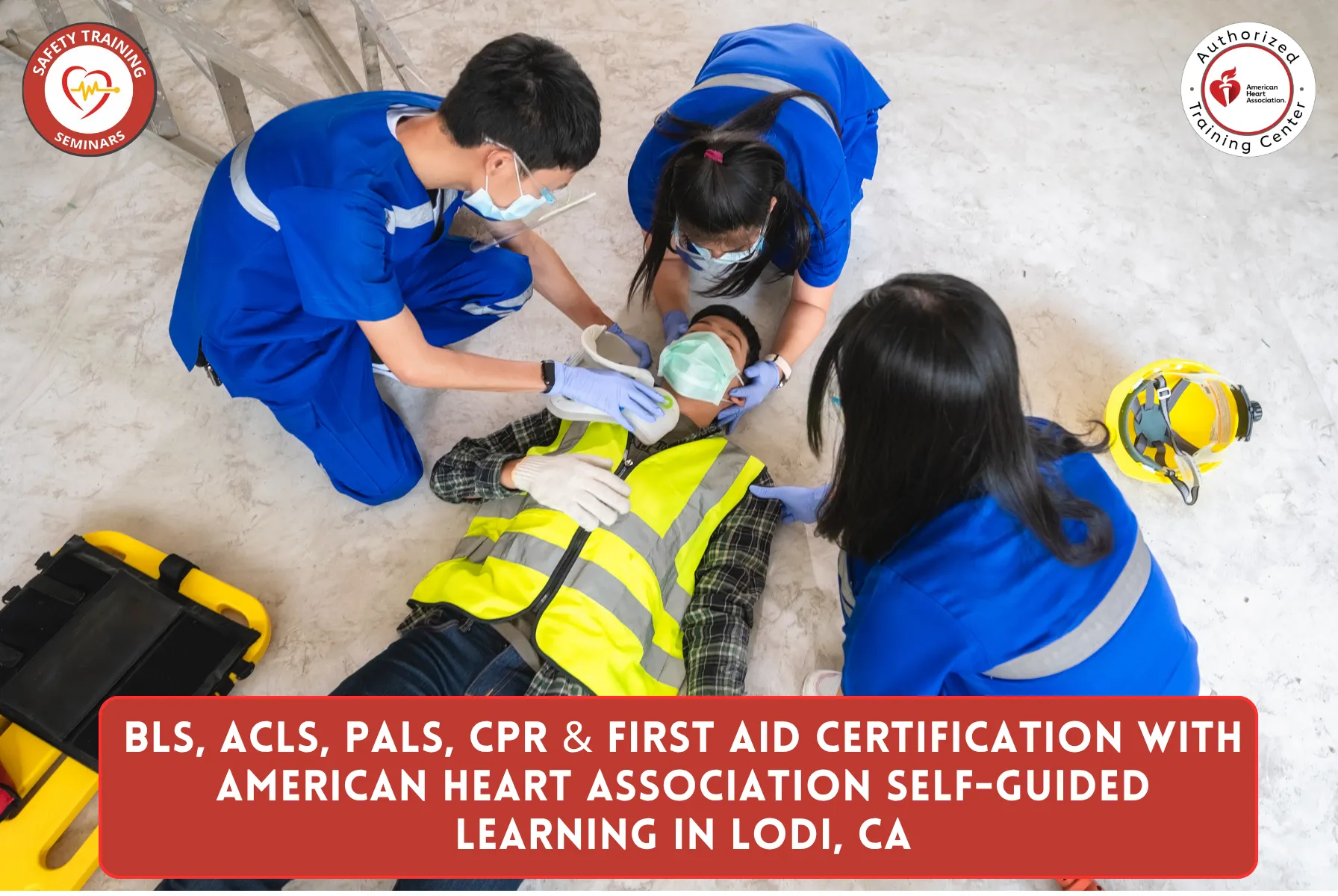
Balancing long workplace shifts, clinical rotations, or family commitments can make finding an open, full-day classroom slot difficult for professionals in Lodi, California. American Heart Association Self-Guided Learning offers an efficient hybrid pathway that resolves these scheduling conflicts. By separating theoretical study from practical skills evaluation, this method allows candidates to work through digital coursework at their own pace before demonstrating physical techniques locally. Whether you are an agricultural operations manager setting up workplace First Aid, a nursing student preparing for clinical placements, or an urgent care clinician renewing advanced resuscitation protocols, this approach provides a valid AHA credential without forcing you to sit through hours of group lectures.
Key Takeaway: AHA Self-Guided Learning combines independent online cognitive coursework with a brief, mandatory in-person skills session on feedback manikins. Because regulatory boards, hospitals, and school districts set distinct compliance rules, learners should always verify their required course track prior to enrollment.
What American Heart Association Self-Guided Learning Entails
American Heart Association Self-Guided Learning—often referred to as blended learning—divides emergency cardiac and safety instruction into two distinct components. Instead of spending an entire day inside a traditional classroom, students cover cognitive concepts remotely using interactive digital modules such as HeartCode BLS, ACLS, PALS, or Heartsaver.
The training workflow consists of four logical steps:
- Interactive Digital Study: Access web-based learning modules from any computer or tablet, navigating through interactive clinical scenarios and videos at your own speed.
- Cognitive Assessment: Pass the embedded quizzes and simulated patient scenarios to generate an official AHA online completion certificate.
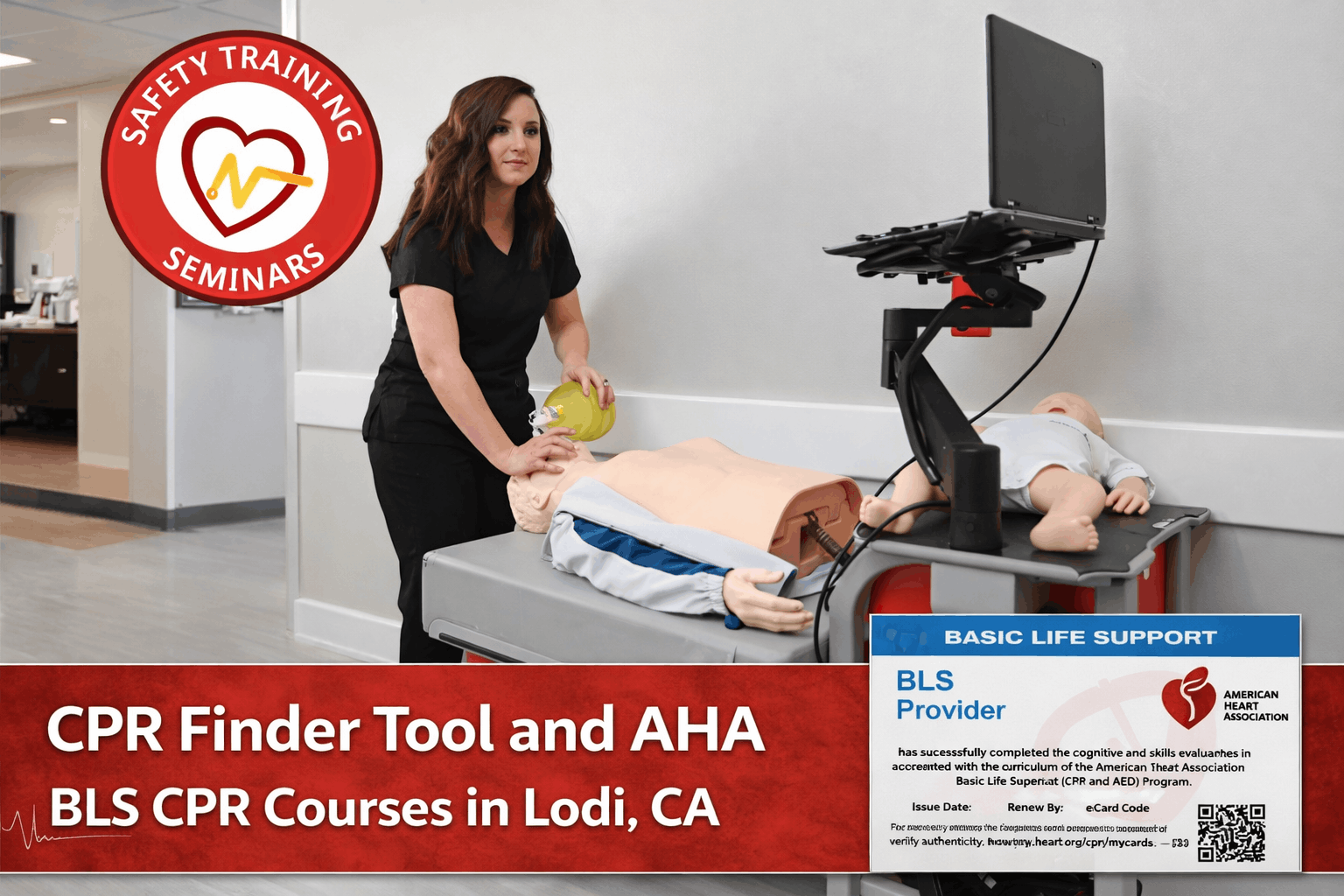
- Physical Skill Verification: Schedule a brief appointment at a local facility to demonstrate physical competencies—such as high-quality chest compressions, bag-valve mask ventilation, and AED operation—on feedback-equipped manikins.
- Credential Issuance: Receive an official AHA provider eCard after successful verification of both digital and physical skill components.
This dual-part framework differs significantly from non-accredited “online-only” certificates. Courses completed strictly online without physical manikin testing are widely turned away by California hospitals, dental boards, OSHA regulators, and emergency services agencies. The AHA self-guided format avoids this compliance issue by incorporating mandatory, real-world skill verification.
Course Options Available for Lodi Learners
Because healthcare settings, school sites, and commercial facilities require varying levels of emergency preparedness, the American Heart Association structures its blended learning paths around specific professional responsibilities.
Basic Life Support (BLS)
BLS serves as the clinical benchmark for healthcare workers in hospitals, outpatient clinics, and emergency response teams. The curriculum emphasizes single-rescuer and team-based adult, child, and infant CPR, automated external defibrillator (AED) integration, bag-mask ventilation techniques, and foreign-body airway obstruction clearance.
In Lodi, individuals who frequently utilize BLS classes in Lodi include:
- Registered nurses, licensed vocational nurses, and nurse practitioners
- Physical therapists, occupational therapists, and rehabilitation specialists
- Paramedics, EMTs, and local fire department personnel
- Medical assistants, phlebotomists, and dental care teams
- Nursing students and allied health candidates completing clinical placement prerequisites
Unlike general public courses, BLS covers clinical indicators, pulse checks, advanced airway support, and structured team resuscitation dynamics.
Advanced Cardiovascular Life Support (ACLS)
ACLS expands upon core BLS concepts to address adult cardiac arrests, acute coronary syndromes, ischemic strokes, and complex arrhythmias. Through digital HeartCode ACLS modules, advanced clinicians manage interactive patient cases, evaluating rhythm strips, directing resuscitation workflows, and selecting appropriate pharmacological treatments.
This training is designed for advanced medical personnel, including emergency department doctors, intensive care unit nurses, telemetry specialists, and urgent care practitioners. The self-guided pathway lets experienced providers move rapidly through familiar concepts while focusing deeply on airway management, peri-arrest algorithms, and post-cardiac arrest care prior to their practical testing.
Pediatric Advanced Life Support (PALS)
PALS concentrates on systematic assessment and emergency stabilization for pediatric patients. The web-based curriculum guides clinicians through pediatric shock recognition, severe respiratory distress interventions, fluid resuscitation calculations, and pediatric cardiac rhythm management.
Pediatric nurses, emergency department clinicians, family practice staff, and mobile intensive care personnel rely on PALS to refine their acute pediatric care protocols. Reviewing these complex algorithms digitally gives providers time to master weight-based dosing and pediatric physiology before demonstrating manual skills.
Heartsaver CPR, AED, and First Aid
Heartsaver programs cater to non-clinical personnel, educators, and workplace safety teams who need foundational life-support skills for employment or personal readiness. The coursework covers adult and pediatric CPR techniques, AED deployment, choking relief, and basic first aid interventions for bleeding, thermal injuries, and sudden medical issues.
Typical Heartsaver participants include:
- K-12 teachers, school administrators, and youth program directors
- Licensed childcare providers, preschool staff, and nannies
- Personal trainers, athletic directors, and health club staff
- Corporate safety leads, construction managers, and industrial teams
Matching Your Role to the Correct Course Track
Registering for the wrong class can result in rejected credentials or delayed onboarding. Use the comparison guide below to evaluate which course aligns with your professional duties:
| Course Track | Primary Audience | Key Competencies Covered |
| BLS | Nurses, physicians, EMS, dental teams, clinical students | High-quality adult/child/infant CPR, bag-mask ventilation, AED, choking, team dynamics |
| ACLS | Physicians, ICU/ER nurses, paramedics, telemetry staff | ECG rhythm analysis, airway management, cardiac pharmacology, resuscitation algorithms |
| PALS | Pediatricians, pediatric nurses, emergency personnel | Systematic pediatric assessment, shock management, fluid therapy, pediatric algorithms |
| Heartsaver CPR/AED | Teachers, daycare providers, coaches, corporate employees | Adult/child CPR, AED deployment, choking relief for non-clinical roles |
| Heartsaver First Aid | Industrial leads, agricultural supervisors, childcare staff | First aid fundamentals, injury management, environmental emergencies |
Note: Mandates vary by employer, school district, and state licensing board. Always double-check your specific requirement with your supervisor or coordinator before signing up.
Comparing Self-Guided, Classroom, and Online-Only Formats
Understanding how instructional delivery styles differ ensures you pick a option that fits both your learning style and regulatory mandates.
Self-Guided (Blended) Learning
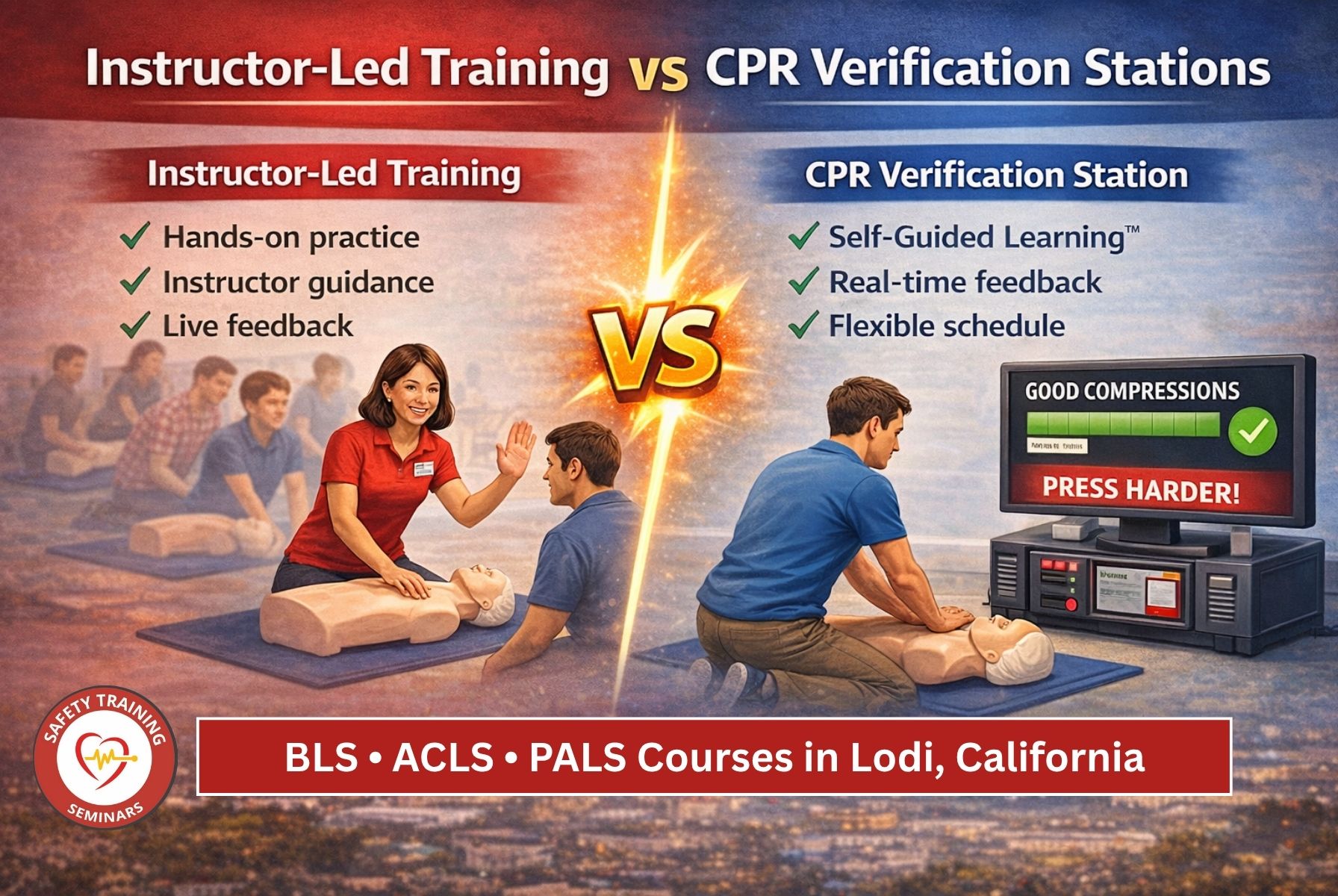
This path pairs independent digital studying with a brief, focused physical skill assessment. It offers maximum calendar flexibility because you complete the cognitive portion on your own device whenever time permits, followed by a short appointment for manikin testing.
Traditional Classroom Seminars
Traditional courses gather a group of learners in a physical classroom for an all-day, instructor-led session. Lectures, video watching, hands-on practice, and written testing occur back-to-back. This model benefits individuals who thrive in structured group environments with immediate, continuous instructor interaction.
Online-Only Programs
Unaccredited online-only websites offer purely digital reading and quizzes without any physical skill evaluation. While they may seem convenient, non-hands-on credentials are routinely rejected by California healthcare employers, OSHA inspectors, and educational institutions.
Local Training Access in Lodi and Surrounding Communities
Situated in San Joaquin County along the Highway 99 corridor, Lodi sits at an important intersection for agricultural processing, manufacturing, regional healthcare services, and education. Medical personnel commuting between local clinics and larger health networks in Stockton, Elk Grove, or Modesto often struggle to block out full days for fixed classroom schedules.
AHA Self-Guided Learning offers these local professionals a practical solution. Learners can work through digital modules during shift breaks or evening hours, then schedule a fast hands-on skill verification close to home.
If you need to update your credentials, explore local ACLS and PALS training options to align your digital coursework with an upcoming skill testing appointment.
Completing Your Training with Safety Training Seminars
Safety Training Seminars delivers official American Heart Association blended learning courses using standardized AHA materials and real-time digital feedback manikins. After finishing your online cognitive modules, you can quickly complete your practical evaluation at our local site.
Lodi Training Center Address:
Safety Training Seminars Lodi CPR Training Center Address: 420 E Kettleman Lane, Suite 3-CS21-A, Lodi, CA 95240
To ensure a smooth skill session:
- Confirm the exact course level (BLS, ACLS, PALS, or Heartsaver) required by your employer or academic institution.
- Complete all online learning modules and print or download your official AHA online course completion certificate.
- Bring your digital or printed completion certificate to your scheduled hands-on evaluation appointment.
Corporate managers and school safety staff can review available CPR and First Aid courses near Lodi to coordinate upcoming group or individual evaluations.
Frequently Asked Questions
Is an eCard earned through Self-Guided Learning accepted by California healthcare employers?
Yes. The provider eCard issued upon completing an AHA blended learning course is completely identical to the card awarded in a traditional full-day classroom seminar. Medical centers, dental boards, and corporate safety officers across California accept official AHA self-guided credentials.
What should I do if I cannot find my online course completion certificate before my skills test?
You must present your official AHA online course completion certificate to participate in the practical skills check. If you misplaced it, log back into your AHA eLearning account using a mobile device or laptop to download and show the document before your appointment begins.
Can nursing candidates and medical students use self-guided BLS to satisfy clinical prerequisites?
Yes. Most California nursing programs, medical schools, and allied health clinical coordinator offices accept blended AHA BLS credentials. However, candidates should always verify specific departmental policies prior to registering.
How much time should I plan for the physical skills evaluation in Lodi?
Because cognitive studying, clinical case simulations, and written quizzes are completed online prior to arrival, the hands-on skill verification is concise, typically lasting 15 to 30 minutes.
Can commuters from neighboring cities complete their skills test at the Lodi center?
Yes. Healthcare providers and workforce members living or working in nearby areas—such as Stockton, Galt, Woodbridge, and Lockeford—can easily schedule their practical evaluation at the Safety Training Seminars training location.
Next Steps for Local Enrollment
American Heart Association Self-Guided Learning offers an efficient, reliable way to maintain essential life support credentials while managing a busy professional schedule. By shifting theoretical studying online and reserving in-person time strictly for manual skill verification, local learners preserve their flexibility without compromising instructional quality.
Before registering for an online course key, confirm the exact card level required by your health system, school district, or licensing board. Once confirmed, complete your digital modules and reserve a physical skill evaluation time with Safety Training Seminars to claim your official AHA eCard.