CPR certification can mean different things depending on where you work, study, volunteer, or provide care. A nurse applying to a Lodi healthcare facility may be asked for BLS, while a teacher, coach, warehouse supervisor, or childcare provider may need CPR and First Aid. The course names may sound similar, but selecting the wrong one can delay onboarding, licensing, clinical placement, or workplace requirements.
For Lodi, California residents, the practical first step in 2026 is to confirm the exact course title required by the employer, school, licensing agency, or organization requesting certification. Once that is clear, compare the course format, skills requirements, location, and completion documentation before enrolling. Safety Training Seminars offers local options for CPR, First Aid, BLS, ACLS, PALS, and NRP so learners can match training to their responsibilities.
Key Takeaway: BLS is generally designed for healthcare professionals, while standard CPR and First Aid often serve workplace and community audiences. ACLS, PALS, and NRP are specialized clinical courses and should be selected when specifically required.
Start With the Requirement, Not the Course Name
Many people are told to “get CPR certified” without receiving enough detail. That phrase may refer to a general CPR class, CPR combined with First Aid, or a healthcare-focused BLS CPR Certification Course. Before paying for a class, ask the person or organization requesting the credential to provide the exact course name and required format.
Useful questions include:
- Do I need CPR only, or CPR and First Aid?
- Is BLS specifically required?
- Must the course include a hands-on skills assessment?
- Do I need adult, child, and infant CPR?
- Is this an initial certification or a renewal?
- Is ACLS, PALS, or NRP also required?
Written confirmation is better than relying on a general verbal instruction. This is especially relevant for nursing students, healthcare applicants, childcare workers, and licensed professionals whose documentation may be reviewed before they begin work or training.
Understanding the Main Certification Options
Choosing correctly becomes easier once the purpose of each course is clear.
CPR and First Aid
CPR training teaches learners how to recognize cardiac arrest, activate emergency response, perform chest compressions, provide breaths when included, and use an automated external defibrillator. First Aid adds response skills for injuries and sudden illnesses.
This combination may be appropriate for teachers, childcare providers, fitness professionals, workplace teams, caregivers, coaches, parents, and members of the public. Each employer and licensing body may set its own requirements.
Basic Life Support
BLS is commonly requested for nurses, nursing students, dental professionals, medical assistants, emergency personnel, and other healthcare workers. A BLS CPR Certification Course generally places more attention on high-quality CPR, coordinated team response, AED use, and care for adults, children, and infants.
Someone entering a clinical program should not assume that a general CPR class will satisfy a BLS requirement. The registration page and completion documentation should match the wording supplied by the school or employer.
ACLS, PALS, and NRP
Advanced Cardiovascular Life Support is associated with adult cardiovascular emergencies in clinical settings. Pediatric Advanced Life Support focuses on critically ill or injured infants and children. The Neonatal Resuscitation Program is intended for professionals involved in newborn care.
These are separate courses for different clinical responsibilities. Some professionals may need BLS in addition to an advanced certification.
What CPR and BLS Skills Training May Include
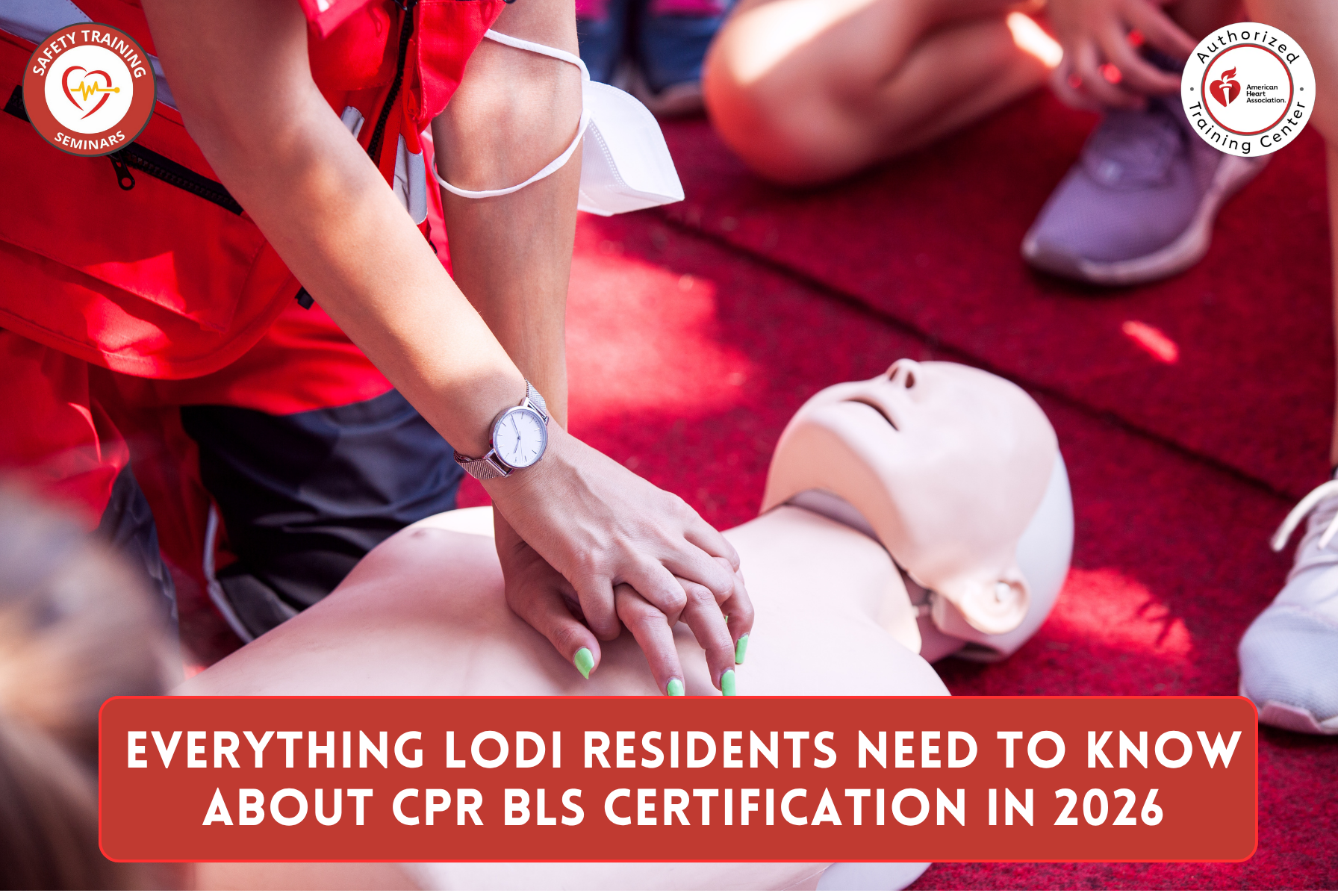
A practical class should prepare learners to perform the steps rather than simply recognize terms. During skills-based training, students may practice chest compressions, rescue breathing, AED operation, emergency-scene assessment, and communication with other responders.
In BLS training, learners may also practice switching roles during a multi-rescuer response. One person may perform compressions while another manages ventilation or prepares the AED. The purpose is to build an organized response.
Students should expect active participation. Comfortable clothing can make floor-level practice easier, and anyone with an injury, disability, or accommodation need should contact the provider before class. Registration instructions should also be reviewed for required preparation.
A 2026 Enrollment Checklist for Lodi Learners
Course availability and employer expectations can vary, so a simple checklist helps reduce enrollment mistakes.
First, obtain the written certification requirement. Next, identify whether a hands-on component is expected. Check whether the course covers the correct age groups and skill level, then verify how completion documentation is issued and whether your employer or school accepts that format.
Lodi residents can compare CPR, BLS, ACLS, PALS, and NRP options in Lodi based on the certification they have been asked to complete.
Do not choose a class based only on the shortest description or the most familiar name. A childcare employee, dental assistant, hospital nurse, and office safety coordinator may all need different training even though each has been told to obtain “CPR certification.”
Local Training Through Safety Training Seminars
Safety Training Seminars provides multiple certification options for Lodi residents at 420 E Kettleman Lane, Suite 3-CS21-A, Lodi, CA 95240. The location can serve healthcare professionals, students, educators, caregivers, workplace teams, and members of the public seeking an appropriate local course.
A local training option can simplify planning around work shifts, school schedules, and family responsibilities. It also gives learners a clear course page to review before registering.
Someone preparing for a hospital role may need BLS, while a teacher or workplace employee may need CPR and First Aid. Advanced clinical staff should confirm whether ACLS, PALS, or NRP is also expected.
When Another Nearby Location May Work Better
Lodi residents often work and study throughout San Joaquin County and nearby communities. Some learners may prefer a class closer to their workplace, school, or regular travel route.
People commuting south can explore CPR and healthcare certification courses in Stockton. Those traveling toward the central part of the county may compare BLS, ACLS, PALS, and CPR classes in Manteca.
Learners working near Lathrop can also review the Lathrop CPR and advanced certification course page. Tracy, Mountain House, and Ripon may be relevant depending on a learner’s schedule and commute.
The most suitable location is the one that offers the required course in a format the requesting organization accepts. Location matters, but course accuracy comes first.
Match Training to Your Role and Avoid Common Mistakes
Healthcare professionals should begin with employer credentialing instructions. BLS is commonly requested for patient-facing roles, while ACLS, PALS, or NRP may apply to specific units. Teachers and childcare providers should check whether CPR, First Aid, and pediatric skills are required.
Fitness professionals and coaches should confirm which age groups their course must cover. Workplace teams should consider their environment and employer safety plan. Parents and caregivers taking a course for personal preparedness can choose based on the situations most relevant to their households.
A common mistake is registering for general CPR when BLS was requested. Another is selecting online-only training without confirming whether hands-on skills are required. Review the requirement early, save the course description, and clarify uncertain wording before enrolling.
Frequently Asked Questions About CPR and BLS in Lodi
Is BLS the same as regular CPR certification?
No. BLS is generally designed for healthcare professionals and emphasizes coordinated response, high-quality CPR, AED use, and care across age groups. General CPR courses are often intended for workplace or community learners.
Which course should a Lodi nursing student take?
The nursing program should provide the exact requirement. Many clinical programs request BLS, but students should confirm the course title and accepted format before enrolling.
Can teachers and childcare workers take the same CPR course?
Possibly, but requirements can differ by employer, school, or licensing authority. They should confirm whether First Aid and pediatric CPR are included in the required course.
Do I need ACLS if I already have BLS?
Only if your employer, clinical department, or professional program requires it. ACLS and BLS serve different purposes, and one does not automatically replace the other.
Can I take an online-only CPR course for work?
Acceptance depends on the employer or licensing organization. Some require a hands-on skills assessment, so verify the accepted format before registering.
Are nearby course options available outside Lodi?
Yes. Course-location pages are available for Stockton, Tracy, Manteca, and Lathrop. Compare the required certification, class location, and travel needs before choosing.
Make the Right Certification Decision in Lodi
The most important step is not enrolling quickly; it is enrolling correctly. Confirm whether you need CPR and First Aid, BLS, ACLS, PALS, or NRP, and check whether a hands-on skills component is required. Then choose a location and course page that match the written instructions from your employer, school, or licensing organization.
Safety Training Seminars offers local training options for Lodi residents and professionals working throughout the surrounding area. Review the relevant Lodi course-location page, compare the available certifications, and select the class that fits your role and documentation requirements.